
Before there was 4P3X™, there was a way of solving problems.
4P3X AI™ did not begin as a plan to create an AI company. It grew from a much longer story about learning to work with limited resources, questioning systems that did not fit everyone, testing ideas with real people and turning every useful lesson into something reusable.
The technology came later.
I grew up in Oxford in circumstances where money and stability were often limited. I learned early that waiting for perfect conditions can mean waiting forever. If something needed doing, the practical question was usually: what do I have, what can I learn and what can I make work from here?
School was not a smooth, conventional route either. I knew what it felt like when a system had a narrow idea of how somebody was supposed to fit. Years later, that experience would show up in a principle that now runs through the 4P3X work: the system should adapt to the person wherever it reasonably can.
Break the problem down until there is something you can learn, test or build.
I did not come into technology through the usual software-company route. The learning came through practical problems, experimentation, mistakes, repair and having to understand enough of the next thing to keep moving.
That problem-solving pattern existed before any 4P3X product name did.
I learned by having to make things work.
I was not starting with a funded studio, a development department or a conventional computer-science pathway. I was learning in compressed bursts because each new problem had to be understood well enough to solve the next one.
That matters to the origin of 4P3X because the architecture still reflects the same behaviour: understand the constraint, separate the problem into parts, preserve what already works, repair what does not and move forward with evidence rather than assumption.
Limited resources became a design constraint, not an excuse.
There were periods when housing, equipment and working conditions were uncertain. The response was not glamorous: keep learning, keep organising the work and keep using whatever was actually available.
That reinforced an instinct that later became technical: resilient systems should still be useful when bandwidth, hardware, money or ideal conditions are missing.
The first serious builds started with the device I actually had.
The early development work was bootstrapped from a basic smartphone, without outside investment and without a conventional software-development team behind me.
The phone is not the story because a phone is impressive. It matters because it represents the rule that has stayed with the project ever since: do not wait for the perfect tool before proving whether the idea deserves to exist.
Start with the problem. Use what you have. Earn the next level of complexity.
The first big problem was education, not AI.
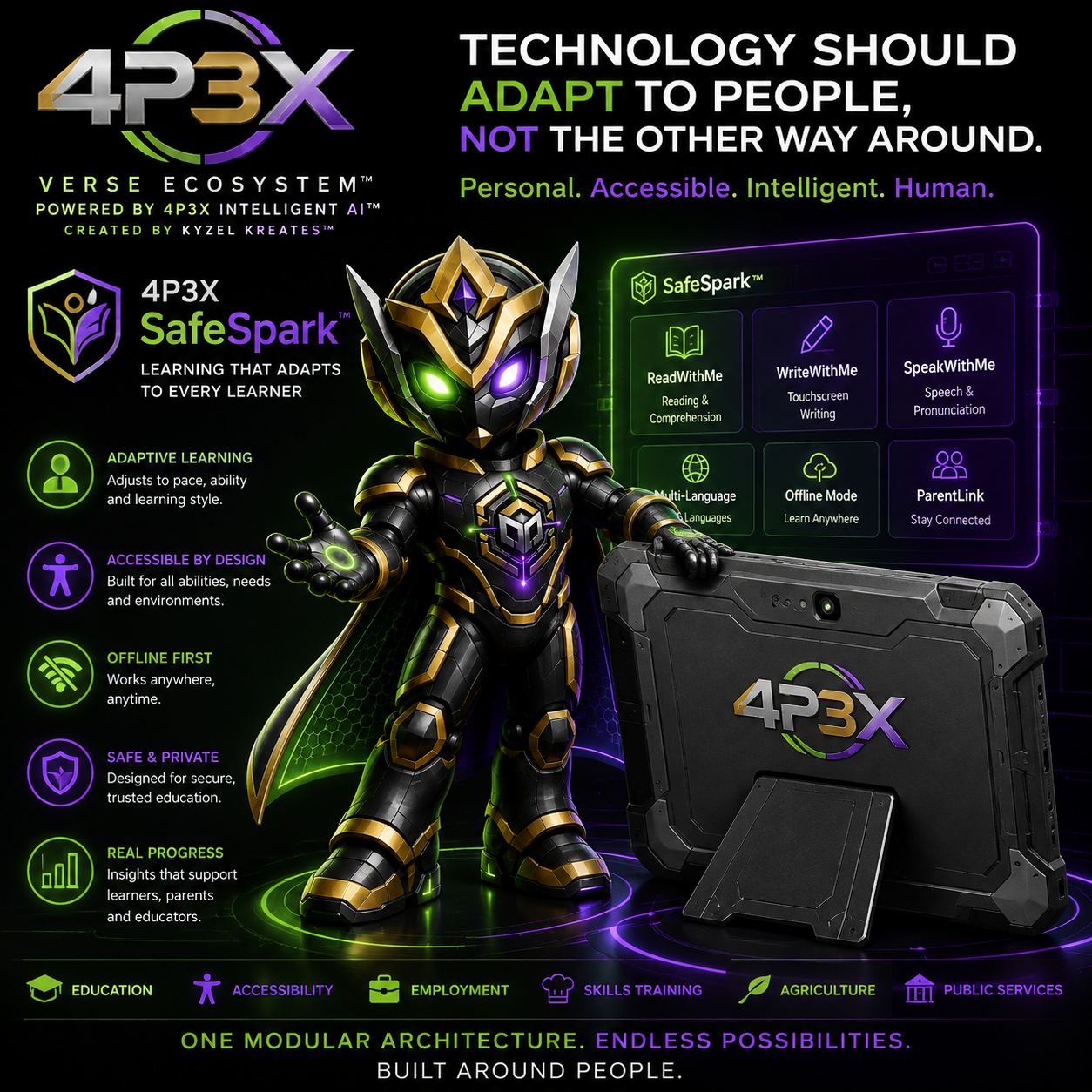
The practical question was whether technology could help children learn safely, privately and in a way that adapts to the individual rather than forcing every learner through exactly the same route.
That became 4P3X SafeSpark™ . Building it forced me to think about offline learning, accessibility, different learning speeds, teacher workload, parent handoff, privacy and what happens when connectivity is unreliable or unavailable.
The idea had to meet real people.
SafeSpark could not stay as something that only made sense to me. Early testing took the idea to parents and children on Paignton seafront, with feedback recorded without collecting unnecessary personal information. The work then moved into conversations and review with schools across Devon, including people responsible for teaching, leadership, administration and additional learning needs.
Watch where people hesitate.
Real users expose assumptions that disappear when the builder is the only person testing the product.
Do not defend the first design.
If a pupil, parent or educator needs a different route, the architecture should be able to change without collapsing.
Keep the lessons that survive contact.
What worked repeatedly became a pattern. What failed became evidence for the next version.
One App started becoming an architecture.
The same design problems kept returning: local-first operation, role-based interfaces, accessible presentation, handoff between people, persistent state, testing, repair, evidence and human control. They were bigger than one education product.
Local-first
Useful behaviour should not disappear just because connectivity does.
Human roles
Different people need different interfaces, responsibilities and authority.
Accessible by design
The system should adapt to the person rather than treating variation as an exception.
Evidence before claims
Build, test, challenge, repair and verify before calling something complete.
The product became a reusable method.
I stopped treating every new idea as an isolated build. The important questions became: which parts are genuinely reusable, which assumptions need challenging and how do we add something new without breaking what already works?
That is the point where a growing collection of projects began to look like one modular architecture, the foundation of the wider 4P3X Verse Ecosystem™ .
Understand → Architect → Build → Test → Challenge → Repair → Verify → Prove.
Speed matters, but a fast wrong answer is still wrong. The goal became faster learning, not faster pretending.
I needed more than prompting.
Working with AI could accelerate parts of the process, but it also exposed new problems: lost context, repeated mistakes, confident answers without proof, broken continuity between tasks and the temptation to mistake generated output for completed work.
I needed a working system that could retain project context, understand requirements, break work into bounded stages, reuse proven components, challenge decisions, test outputs, repair failures and keep a clearer record of what had actually happened.
Know what already exists.
Do not rebuild proven parts simply because the next task looks new.
Question the first answer.
Look for conflicts, missing evidence, unsafe assumptions and simpler routes before acting.
Separate done from claimed.
Execution evidence matters more than an AI saying that something worked.
The working method gradually became 4P3X AI™ : not one enormous prompt, but an architecture for turning goals, constraints and evidence into challenged, testable work.
A broken result is useful if you preserve the lesson.
One of the strongest habits in the 4P3X workflow became refusing to hide failure. A failed solver, broken control, incorrect assumption, weak interface or security problem should not disappear just because a later version works.
The useful question is: what did the failure teach us, and how do we stop the same class of mistake happening again?
Build → Test → Break → Understand → Repair → Retest → Preserve the lesson.
That loop is why verification, evidence, independent checks and explicit human approval became increasingly important as the systems became more capable.
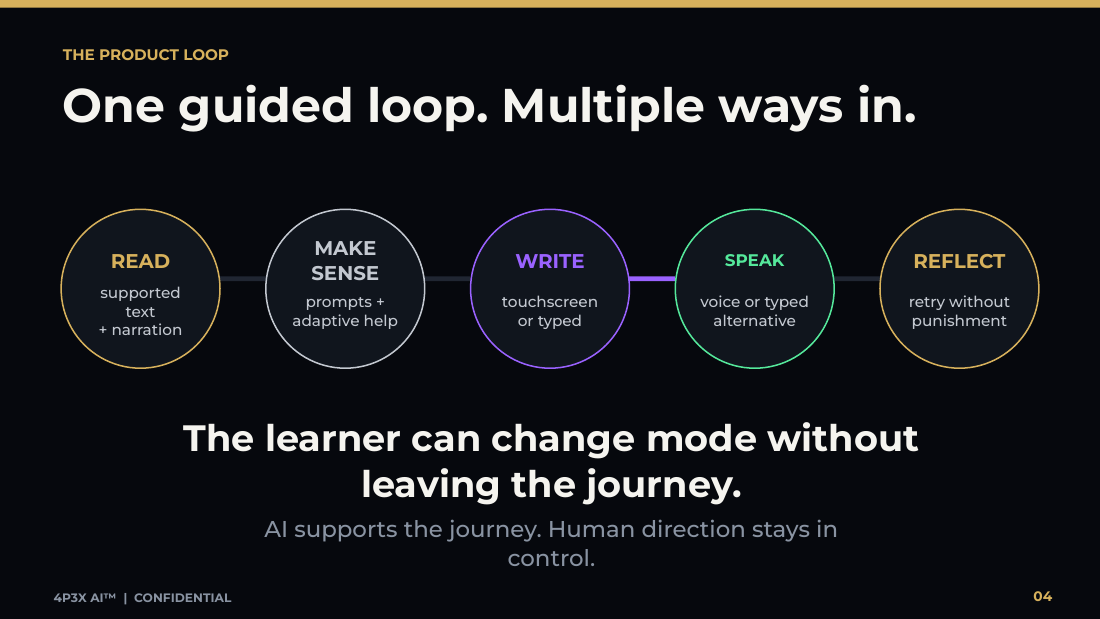
Help people read, write and speak with confidence.
The education work expanded into Read • Write • Speak WithMe™ , built around the same belief that support should adapt to the learner rather than force everybody through one teaching method.
The mission became bigger than a single App: help people around the world build confidence in reading, understanding, writing and spoken communication.
Commercial where it can be. Free where genuine inability to pay would otherwise exclude someone.
Where an individual, school or organisation genuinely cannot afford access, the intention is to provide the relevant learning technology free of charge wherever realistically possible.
Commercial success should help widen access, not create another barrier.
The architecture was no longer only about education.
Once the underlying method became reusable, it could be applied to other domains while preserving the same foundations: understandable interfaces, bounded actions, local resilience, explicit authority and evidence of what actually happened.
Make the next safe step clearer.
Find WithMe™ grew from the same philosophy: help a person understand the task, environment or information in front of them and reduce uncertainty without taking control away from them.
When systems became too complicated for a page, we built worlds.
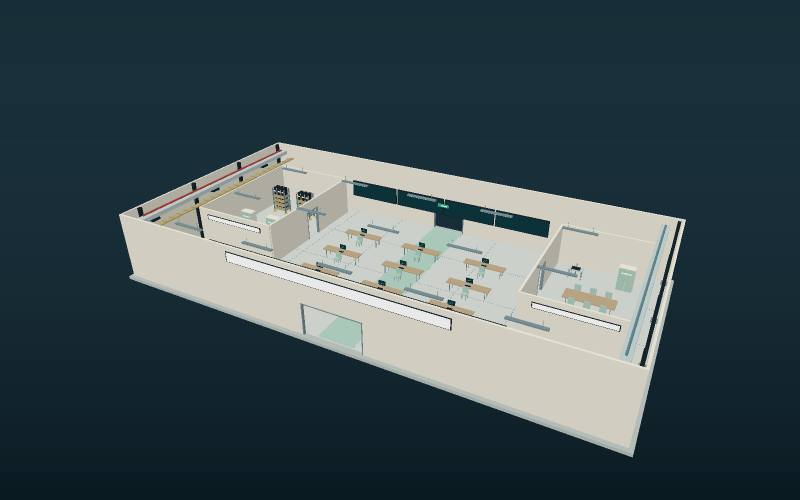
PHOENIX™ and SUBTERRA™ developed as a way to make complex architecture, infrastructure and engineering relationships visible and inspectable. Instead of only describing dependencies in documents, the idea was to create environments where a person could explore them spatially.
That progression moved through the surface world, SUBTERRA™, Systems Alive, persistent state, vehicles, the Engineering Centre and selected space-systems concepts. The wider 4P3X space engineering work continues beyond the current PHOENIX representation.
A dependency is easier to understand when you can walk through it.
PHOENIX™ is a concept and simulation environment. A digital environment is not physical construction, site validation, certification or professional engineering approval.
What should AI be allowed to do?
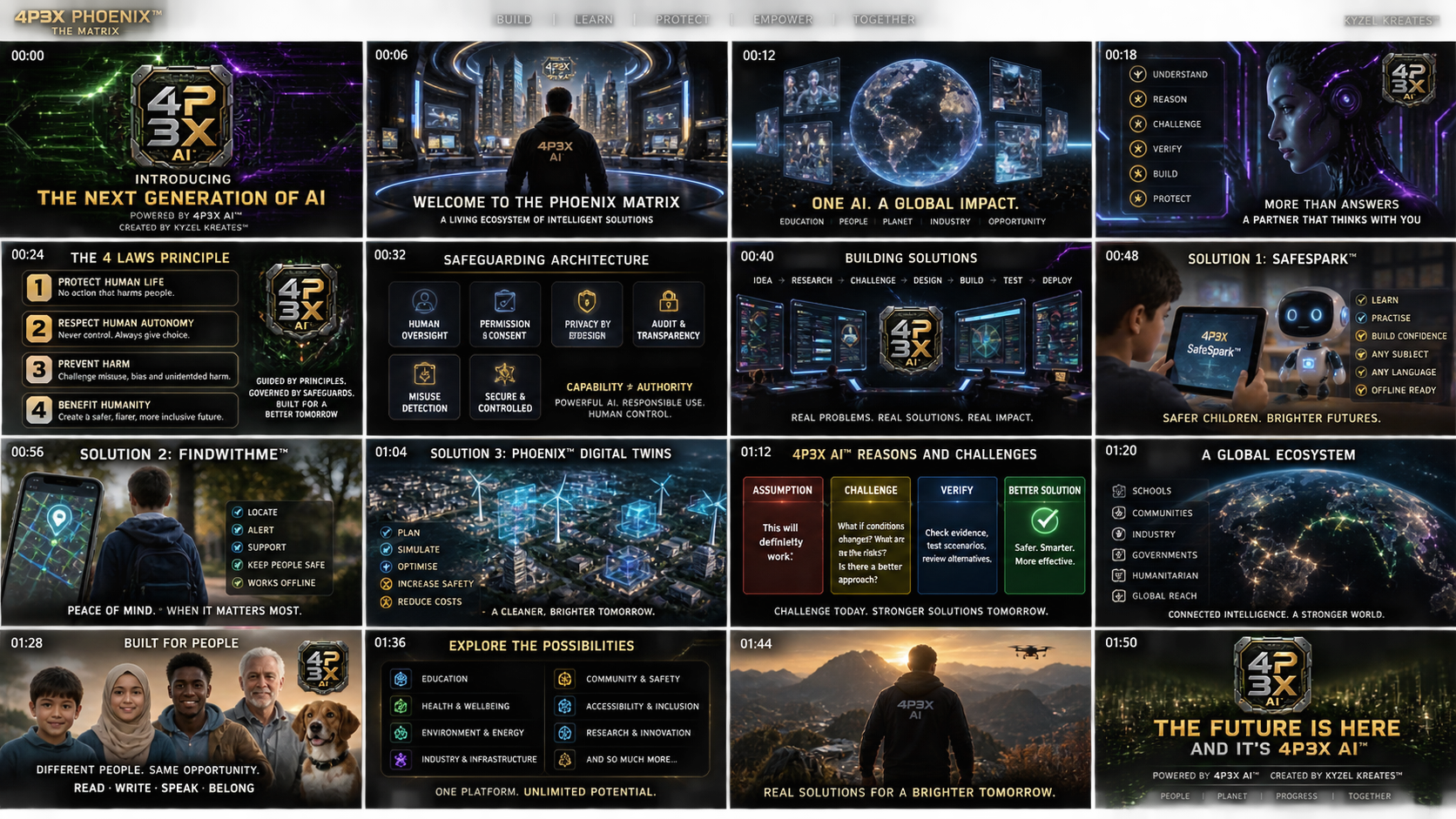
As the systems became more capable, the problem changed. It was no longer enough to ask what AI could do. The harder questions were about authority, permissions, independent evidence and what should happen when an autonomous system is wrong.
That direction became 4P3X Guardian AI™ : work focused on bounded authority, independently recorded actions, challenge before consequential execution and keeping human control where it matters.
Protection must never become control.
A protective system that quietly removes human authority has failed its own purpose. The public reasoning demonstration explores that principle through a bounded, human-controlled simulation.
Different products. The same underlying philosophy.
I did not begin with a technology company and search for a problem. I began with problems. The useful lessons became reusable. The reusable lessons became architecture. That architecture became 4P3X AI™.
The work is real. It is also not finished.
The 4P3X work spans public demonstrations, developing products, engineering concepts that still require qualified professional validation and longer-term research directions.
The next stage is stronger independent testing, better evidence, carefully chosen partnerships, appropriate funding and controlled deployment without losing the principles that shaped the work in the first place.
One practical problem became a working method. The working method became an architecture. The architecture became 4P3X AI™.
The technology has become considerably more sophisticated. The original question remains simple: can we make this work better for the person who actually needs it?
The technology is the toolkit. The human need is the specification.