Not a bunker. A second town beneath the first.
SUBTERRA was pushed towards the same visual and interaction standard as the surface PHOENIX world: generous spaces, functional districts, visible infrastructure, people, service movement and controlled system rehearsal.
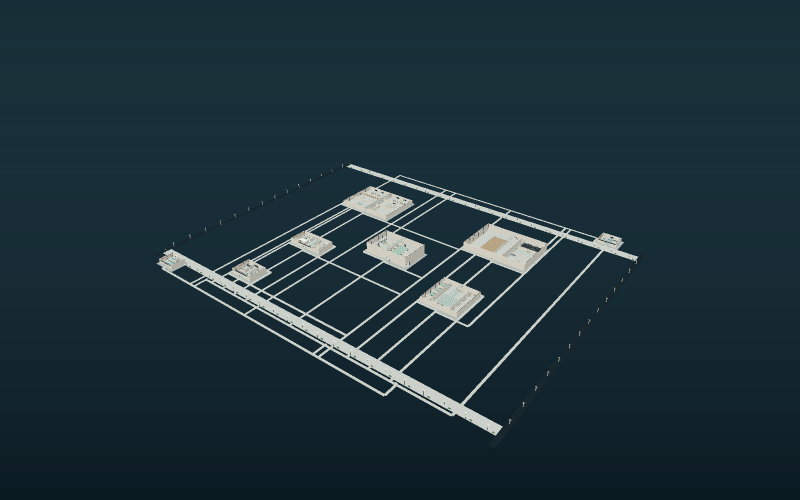
Six levels, deliberately separated by function.
Choose a level to see the public functional plan. Exact physical depth remains site-dependent.
Civic Central and community life
Access, community, education, recreation and the civic heart sit closest to the surface connection.
Designed as an underground town centre, not a compressed transit bunker.
The underground world became more legible and more alive.
Level-specific language
Guidance strips, service seams, indirect lighting and level identity create a readable underground street system.
Residents, engineers and shuttles
Quality-scaled generic inhabitants and two small service shuttles bring movement into civic, logistics and repair routes.
Visual emergency states
Normal, Power Loss, Smoke Zone and Water Leak modes change the public simulation treatment without pretending to be real emergency instructions.
Power · Water · Air · Heat · Data
System lenses expose the authored infrastructure routes instead of hiding everything behind decorative walls.
Walk the dependencies
A guided route connects civic space, homes, health, food, water, thermal, compute and repair/spares.
Surface parity is the benchmark
The underground environment is required to meet the surface world’s visual, spatial and interaction quality rather than being deliberately simplified.
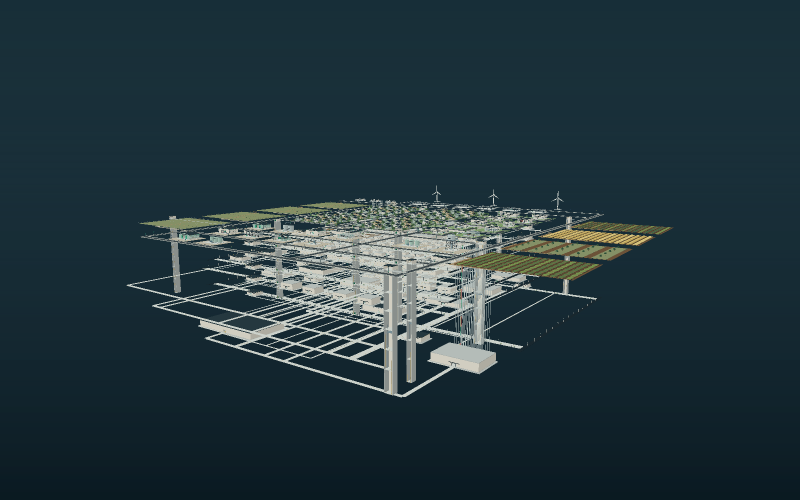
Surface and SUBTERRA share state.
The unified world layer records environment, location and compact system state locally, while active driving and simulated fault scenarios require deliberate re-entry instead of silently resuming.