A 3D world that became a systems laboratory.
The current public PHOENIX development line is V12.4. The story runs from the surface living world and SUBTERRA through persistent systems simulation, vehicles, the Engineering Centre and a Space Systems & Orbital Engineering wing containing selected concept hardware twins.
V12.4.
PHOENIX V12.4 brings together the unified world, SUBTERRA, Systems Alive, persistence, driving, renderer compatibility and a selected space-systems concept layer.
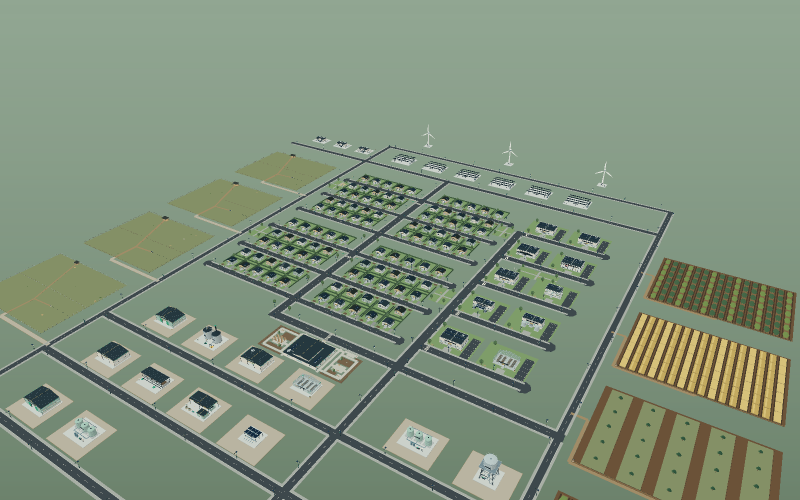
What PHOENIX has grown to represent.
5 → 100 home configurations
The same world architecture scales across multiple settlement sizes rather than being one fixed cinematic scene.
People, wildlife and weather
Generic route-aware people, animals, day/night and wet-weather behaviours make the environment respond as a world rather than a static model.
Walk, run, drive, inspect
Surface movement, interiors, Engineering Centre, vehicles and SUBTERRA share a stabilised control layer.
World state can continue
Local persistence records settings and world continuity while deliberately refusing to silently resume active vehicle control or fault scenarios.
Enhanced, not dependent
WebGL can improve the presentation, but the core simulation contract retains a CPU Compatibility 3D path.
Above and below are connected
SUBTERRA sits beneath the surface town inside the same conceptual world with deliberate transitions, infrastructure and system state.
Orbital engineering joins the same world
The Engineering Centre now includes a dedicated H9 wing for orbital compute, power, thermal, communications, integrity, deployment, resilience and governed space operations.
Space Systems & Orbital Engineering.
PHOENIX extends its Engineering Centre into an H9 space wing to make selected engineering ideas inspectable in 3D. This is one visualisation layer of the broader 4P3X space engineering work, not a complete or highest-fidelity representation of that programme.
Engineering principles in a walkable wing
Orbital compute, compute placement under constraints, power and energy scheduling, thermal and vacuum engineering, resilient communications, radiation/ECC/result integrity, deployment, fault resilience and Guardian AI™ operations.
Selectable concept hardware
Ground station, communications and optical relay satellites, orbital compute, solar-power/compute platform, service tug, remote lander, deep-space explorer, orbital station/compute hub and launch/transfer vehicle.
Show the system, not the secret sauce
The public experience can rotate, zoom, select components, focus, isolate, ghost, explode/assemble and inspect sections.
Placement is a systems decision.
Public scenarios demonstrate that workload placement can be constrained by energy, thermal headroom, link state, jurisdiction, mission criticality and independent-verification requirements rather than assuming one fixed compute location.
From a Wildcat fleet to R1 COMMAND.
The connected world still contains the scalable Wildcat fleet and the drivable R1 COMMAND concept vehicle. V12.4 adds space engineering without removing the established vehicle, SUBTERRA, persistence or systems-simulation layers.
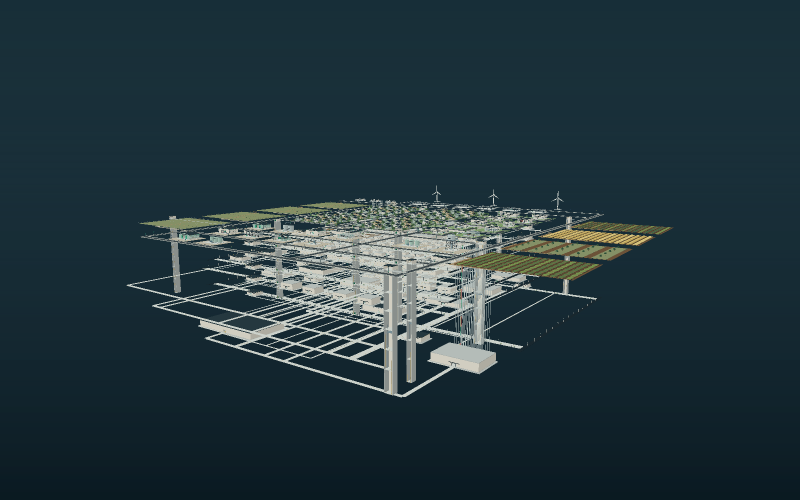
The surface is only half the world.
SUBTERRA is the underground counterpart: civic space, homes, health, food, utilities, strategic plant and resilience systems arranged across six functional levels.